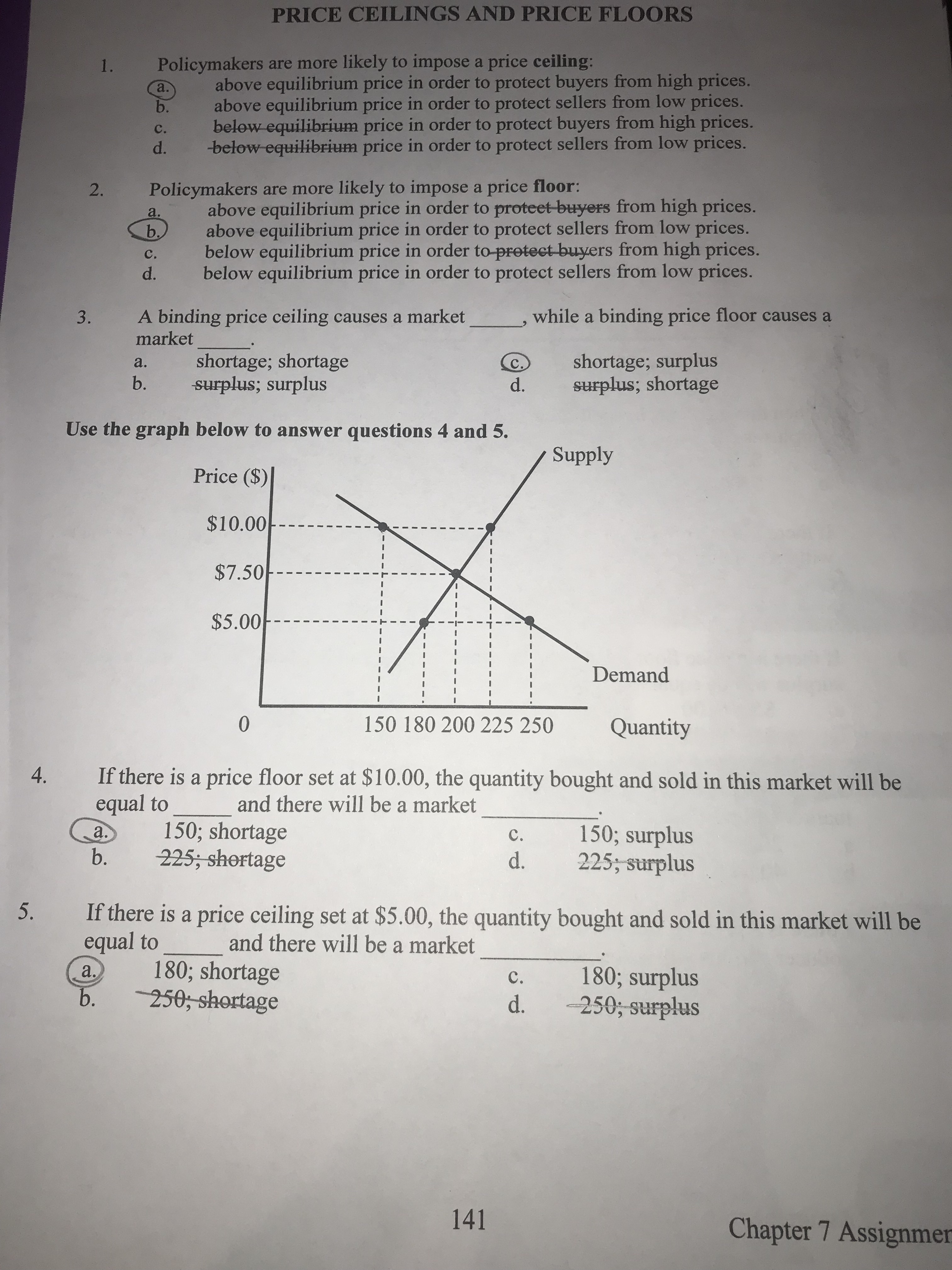
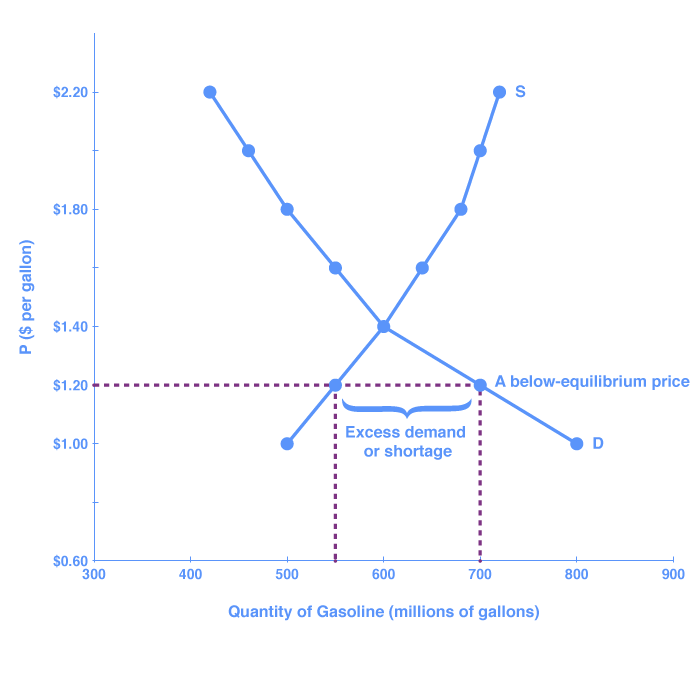
A price ceiling imposed above the market equilibrium price will result in a shortage of the product.
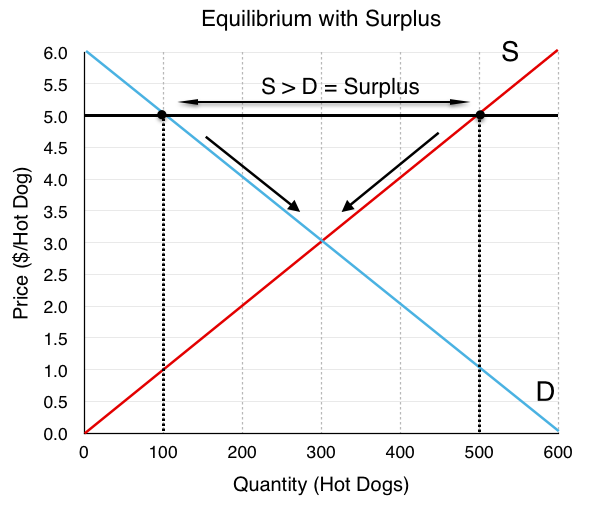
A price floor set below the equilibrium price will result in a surplus true false.
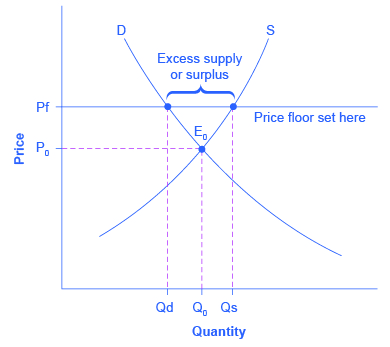
A price floor set below the equilibrium will result in a surplus.
The effect of government interventions on surplus.
This is the currently selected item.
If the equilibrium price of gasoline is 3 00 dollars per gallon and the government places a price ceiling on the gasoline of 4 00 dollars per gallon the result will be a shortage of gasoline.
A price floor is a government or group imposed price control or limit on how low a price can be charged for a product good commodity or service.
Price and quantity controls.
Price floors prevent a price from falling below a certain level.
Example breaking down tax incidence.
A price floor must be higher than the equilibrium price in order to be effective.
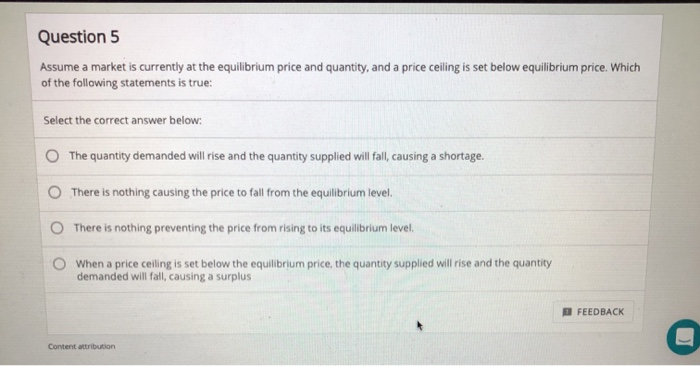
When a price ceiling is set below the equilibrium price quantity demanded will exceed quantity supplied and excess demand or shortages will result.
The equilibrium price commonly called the market price is the price where economic forces such as supply and demand are balanced and in the absence of external.
A rent control set below the market equilibrium price will result in a reduction of rental units supplied in the market assuming the supply is consistent with the law of supply.
False shortage as the real wage increases the opportunity cost of not working outside the home increases.
Taxation and dead weight loss.
Price ceilings and price floors.
A price ceiling set above the equilibrium price is not binding.